Crash and injury mechanisms
Safety relationships can change across road users, locations, and periods. My work uses spatial models, temporal analysis, and random-parameter approaches to examine this heterogeneity, rather than assuming one average effect transfers to every setting.
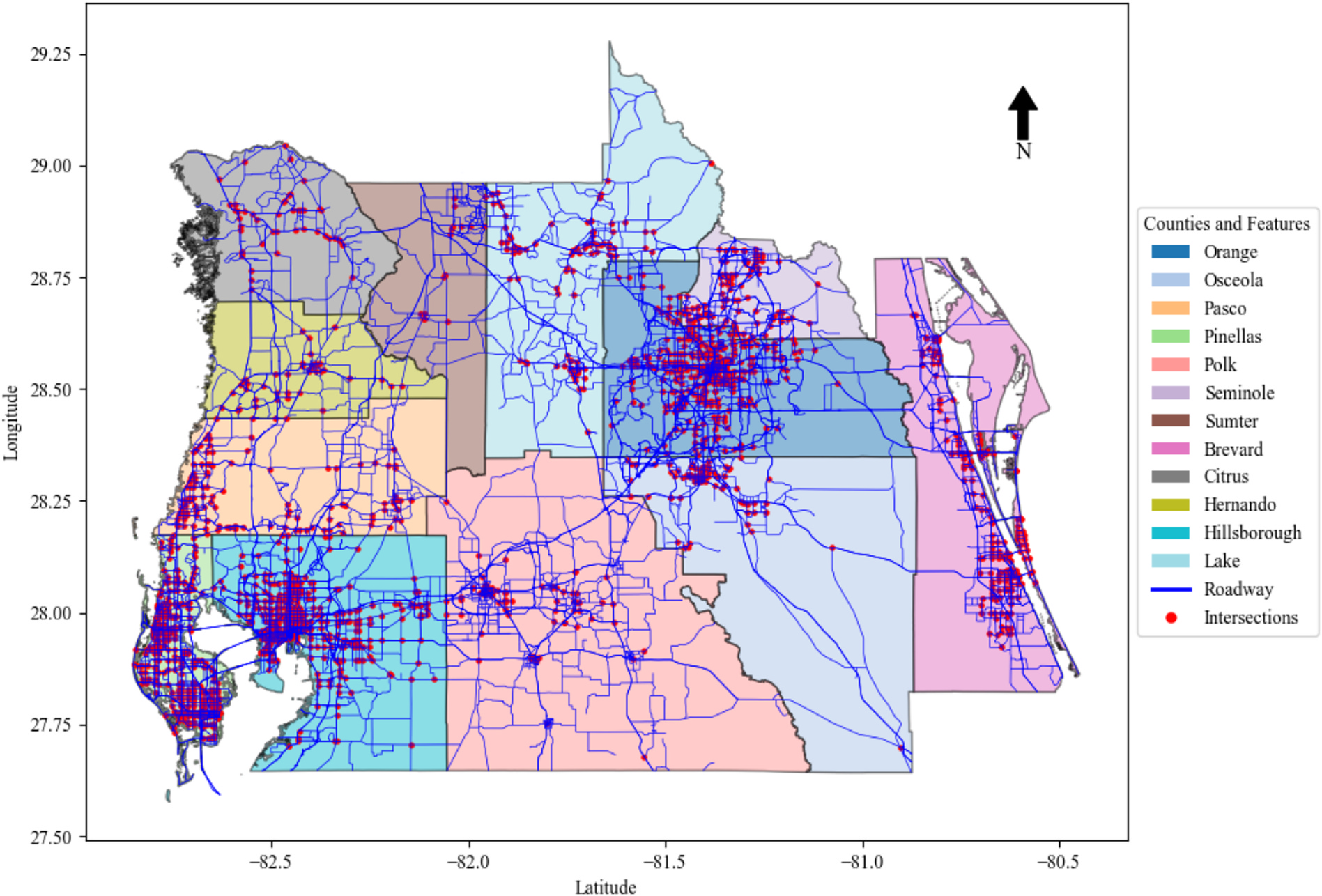
Intersection crash frequency and pedestrian injury severity across vehicle movements are complementary examples.
Human factors and vulnerable road users
Behavioral evidence helps explain how risks develop. I study driver perception and reaction, workload, pedestrian distraction, and vehicle-pedestrian interactions.
The vehicle-pedestrian interactions review connects crash analysis with conflict assessment. Related intersection interaction research examines right-turning vehicles and pedestrians using conflict and crash datasets.
Roadway design and environmental context
My earlier engineering practice and plateau-road research inform a continuing interest in how physical road conditions interact with human capabilities. Studies of perception-reaction time and minimum horizontal curve radius link behavioral and psychophysiological evidence with design questions.
Methods: causal analysis, Bayesian and random-parameter models, spatial effects, behavioral measurement, and psychophysiological assessment.